
What are CRM and ERP: features and functions in business management
When we talk about CRM (Customer Relationship Management) and ERP (Enterprise Resource Planning), we always mean software solutions that aim to help companies improve their processes by increasing efficiency and reducing waste.
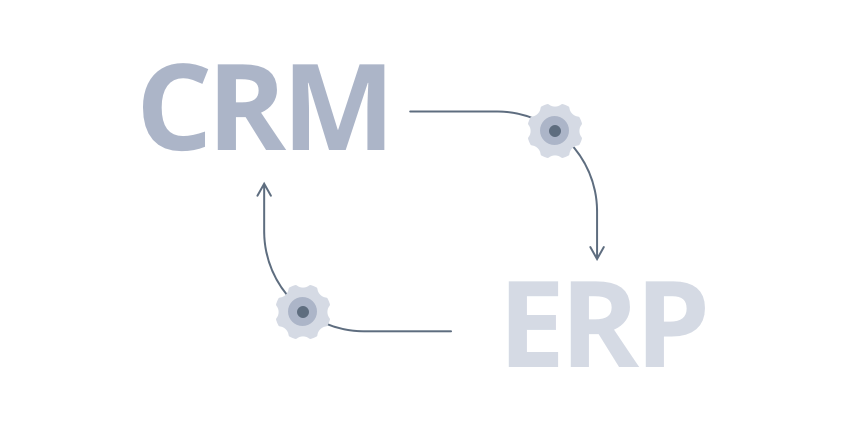
However, we often think of them as two rather distinct worlds with different purposes, while in reality CRM and ERP integration brings enormous benefits.
First of all, the company’s customer data can be automatically updated, using the ERP as the source. It is correct that the fundamental data for the administrative part is entered and governed by the ERP, but it becomes a waste of time and resources to repeat the entry into the CRM manually.
Consolidate your analytics data
Then there are all the consolidated sales and turnover data by year, the payment schedule and any outstanding payments, as well as a whole series of KPIs related to the products, prices, and purchase volumes of each customer. All this information, always present in an ERP, is absolutely important and must be present within the CRM as it helps all company departments (Sales, Customer Service, Marketing, etc.).
The CRM is usually considered a front-office tool because it facilitates customer relationships by collecting and organizing all the data relating to each contact. This benefits sales staff, customer service, the marketing department, and managers.
The ERP, on the other hand, is attributable to back-office activities. This type of software is designed for managing sales orders and, more generally, the fulfillment process. It is also used for invoicing, collection, and sales accounting processes.
It is therefore clear that CRM and ERP are complementary solutions and, when properly integrated, result in effective optimization of work times. This represents a real leap in quality for the entire company, which benefits in terms of productivity and efficiency.
ERP and CRM systems: the advantages of integration
CRM and ERP integration is invaluable for automatically importing sales orders generated from quotes created by salespeople in the CRM into Enterprise Resource Planning.
Optimized and integrated management of all these processes allows each department to have a complete picture of the information relating to each customer. This provides the company not only with details on how many sales orders have been received, but also with a detailed report on the quote/order ratio, the products offered, the best-selling ones, etc.
This 360-degree view of customers also brings great advantages to customer service, as it allows you to know every piece of information about the customer, such as their level of loyalty, preferences regarding the products and services offered, recent purchases, etc. The result is that a support request will be met with an immediate and precise response.
This increased responsiveness is also evident in other company departments, because everyone has access to the data provided by the CRM and ERP integration.
A comprehensive overview that ensures significant time savings, leaving more room for developing targeted marketing and sales strategies, always leveraging the data obtained from the systems.
The benefit is therefore twofold: on the one hand, time optimization, on the other, more accurate and useful data for developing effective strategies and better financial planning. Yes, because CRM and ERP integration also means detailed reports, which allow for better predictions of future trends. The resulting advantages are numerous: from reducing budget waste to optimizing cash flow.
For those of us at ITTweb, who have ERP application integration written in our DNA, it’s natural to find the best solution to give your company a competitive advantage. Contact us and let’s discuss it together.